• JOURNAL_ENTRIES / DEVELOPER MINDSET
Today’s Free AI Could Become Tomorrow’s Mandatory Subscription
MAY 9, 2026
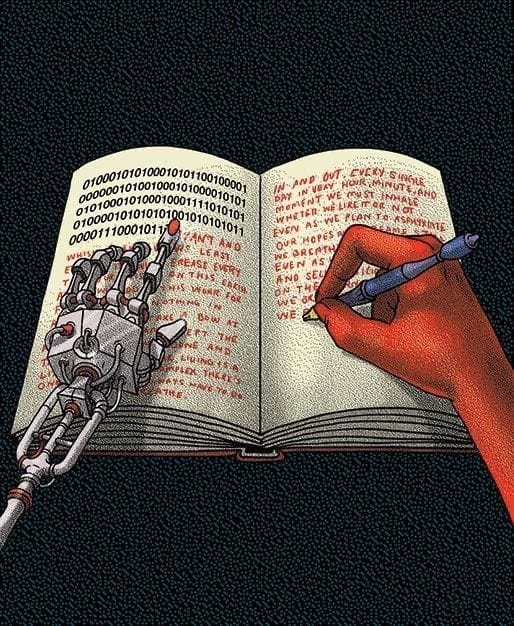
AI tools have dramatically reduced the friction of coding, making developers faster than ever. But as convenience slowly becomes dependency, are we risking our independent problem-solving skills for temporary productivity?
ARCHIVE_NOTE
AI tools have dramatically reduced the friction of coding, making developers faster than ever. But as convenience slowly becomes dependency, are we risking our independent problem-solving skills for temporary productivity?
A few years ago, learning to code meant learning how to struggle. You searched through endless Stack Overflow threads. You read documentation you barely understood. You spent hours debugging one stupid error only to realize you missed a comma somewhere. It was frustrating. But that frustration built something important: problem-solving ability.
Now everything feels different. Today, developers can open an AI tool and get instant answers for almost anything. Need a React component? AI generates it. Need debugging help? Paste the error message. Need SQL queries, deployment fixes, architecture ideas, regex patterns, documentation, or even commit messages? AI already has a response waiting for you. And honestly, it feels incredible.
For the first time in history, developers have access to tools that can dramatically reduce friction between ideas and execution. Beginners can build projects faster. Experienced developers can move quicker. Small teams can produce work that once required entire companies.
AI is not just changing software development. It is changing the behavior of developers themselves. And that is the part I think we are underestimating.
Convenience Slowly Becomes Dependency
The most powerful technologies are usually the ones that quietly become habits. Nobody planned to become dependent on GPS. Nobody intentionally wanted shorter attention spans from social media. Nobody thought autocorrect would affect how often we remember spellings ourselves. Convenience changes behavior slowly.
At first, AI feels like assistance. You use it for repetitive tasks:
- fixing syntax errors,
- generating boilerplate,
- summarizing documentation,
- or speeding up debugging.
But over time, something subtle starts happening. Instead of thinking first, you ask AI first. Instead of experimenting manually, you wait for suggestions. Instead of deeply understanding systems, you focus on getting outputs faster. And because AI is usually correct enough, the habit keeps growing.
That is where things become interesting. Because the danger may not be AI replacing developers. The danger may be developers slowly losing the ability — or patience — to solve difficult problems independently.
The Death of Productive Frustration
One thing I have noticed while learning programming is this:
The moments that taught me the most were usually the moments I hated the most. The bugs that took hours to fix. The concepts that made no sense initially. The projects that broke repeatedly. That struggle was painful. But it forced me to think. And thinking is what transforms information into actual skill.
AI removes a lot of that painful friction. Which sounds amazing at first. But friction is also where deep learning happens. When developers rely too heavily on AI-generated solutions, they may improve productivity while weakening understanding.
You can already see signs of this. Many people can now build applications surprisingly fast with AI assistance, but struggle to explain:
- why the code works,
- how the architecture scales,
- what the tradeoffs are,
- or how to debug the system without external help.
The output looks impressive. But sometimes the understanding underneath is shallow. That is the uncomfortable tradeoff nobody talks about enough.
The Business Model Behind “Free”
Right now, AI feels generous. Some of the most powerful tools in history are available for free or at surprisingly affordable prices.
And that makes sense. Because every major technology platform follows the same pattern:
- attract users,
- become essential,
- monetize dependency.
Social media platforms did this. Streaming services did this. Cloud software did this. AI companies are businesses too.
Eventually, these tools will not just be optional productivity boosters. They will become infrastructure. And infrastructure is rarely cheap forever.
Imagine a future where:
- advanced reasoning is locked behind premium tiers,
- coding agents charge per task,
- debugging assistance becomes usage-based,
- or developers need multiple AI subscriptions just to stay competitive.
At that point, developers may not pay because they want to. They may pay because their workflow depends on it. That changes the relationship completely.
AI Is Not the Enemy
To be clear, this is not an anti-AI argument. I use AI constantly. Most developers do now.
AI can accelerate learning, reduce repetitive work, improve productivity, and help people build things that once felt impossible. That part is real.
But tools become dangerous when they replace thinking instead of supporting it. There is a huge difference between:
- using AI as an assistant,
- and becoming unable to function effectively without AI.
The best developers of the future probably will not be the people who reject AI entirely. They will be the people who still maintain independent thinking while using AI strategically.
Because eventually, the real competitive advantage may not be who uses AI. It may be who can still think without it.
The Developers Who Will Remain Valuable
AI will absolutely continue improving. That is inevitable. But some skills are still deeply human:
- problem-solving,
- engineering judgment,
- creativity,
- communication,
- architectural thinking,
- understanding tradeoffs,
- and knowing when generated solutions are wrong.
AI can generate answers. But understanding why an answer matters is different. That still requires human thinking.
And I think the developers who survive long term will be the ones who continue training that skill instead of outsourcing it completely.
Final Thoughts
AI feels like a superpower right now. And maybe it truly is. But every powerful technology reshapes the people using it.
The question is not whether AI will become part of software development. That already happened.
The real question is this:
Are we using AI as a tool… or are we slowly training ourselves to become dependent on it?
DEVELOPER EXPERIENCE
MAY 23, 2026
VIBE CODING CAN BUILD PRODUCTS FAST, BUT DEPLOYING CODE YOU DON'T UNDERSTAND CAN QUICKLY TURN INTO A SECURITY NIGHTMARE—AND A MASSIVE REALITY CHECK.
The Day I Hacked a Vibe-Coded Project and Taught a Lesson on Why Fundamentals Matter
DEVELOPER MINDSET
MAY 8, 2026
Programming can feel overwhelming, confusing, and mentally exhausting at the beginning. Here is how frustration, debugging, and consistency slowly transformed confusion into confidence.